MI vs RR at Wankhede, 24 May 2026: the afternoon preview that framed Royals' must-win
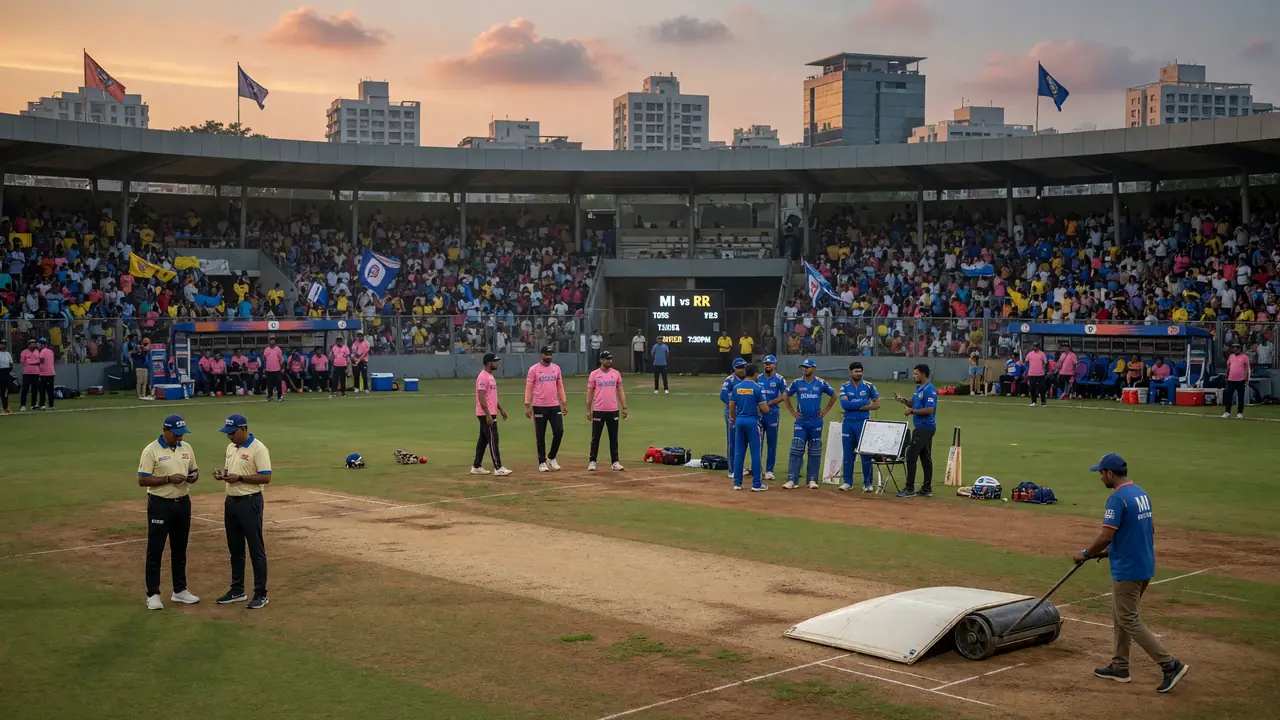
On 24 May 2026, The Times of India published a match-day preview of Mumbai Indians against Rajasthan Royals at Wankhede Stadium. The fixture was an afternoon IPL 2026 contest with sharply unequal stakes: Royals still hunting a playoff berth, Mumbai already eliminated and playing to protect pride. This desk note reconstructs that preview — predicted XIs, head-to-head, toss timing, pitch and Mumbai weather — as a historical match-day brief for fantasy readers who still study late-season Wankhede games.
Why the 24 May fixture still matters on a match desk
Late-season IPL fixtures often look similar on a fixture list and very different once the table is opened. The Times of India preview dated 24 May 2026 made that gap explicit for Mumbai Indians versus Rajasthan Royals at Wankhede Stadium. Royals arrived with major playoff implications and treated the game as a must-win for a playoff berth. Mumbai Indians had already been eliminated from IPL 2026 and were playing for pride while trying to avoid a bottom-table finish.
That split shaped every line of the preview. For Royals, a loss would tighten the path into the knockout window. For Mumbai, the contest was about professional standard rather than ladder mathematics. Mumbai head coach Mahela Jayawardene said pride and avoiding a wooden-spoon finish still mattered for the five-time champions — a quote that framed the home side’s motivation without pretending the table still offered them a path upward.
For fantasy readers, unequal stakes are not decoration. They change how aggressively a side chases, how early a captain risks a third seamer, and whether a teenager is left to face the new ball against a premier fast bowler. The 24 May brief is worth keeping on file because it shows how a single afternoon at Wankhede can carry two different match briefs inside one toss.
Bumrah versus Sooryavanshi, revisited from Guwahati
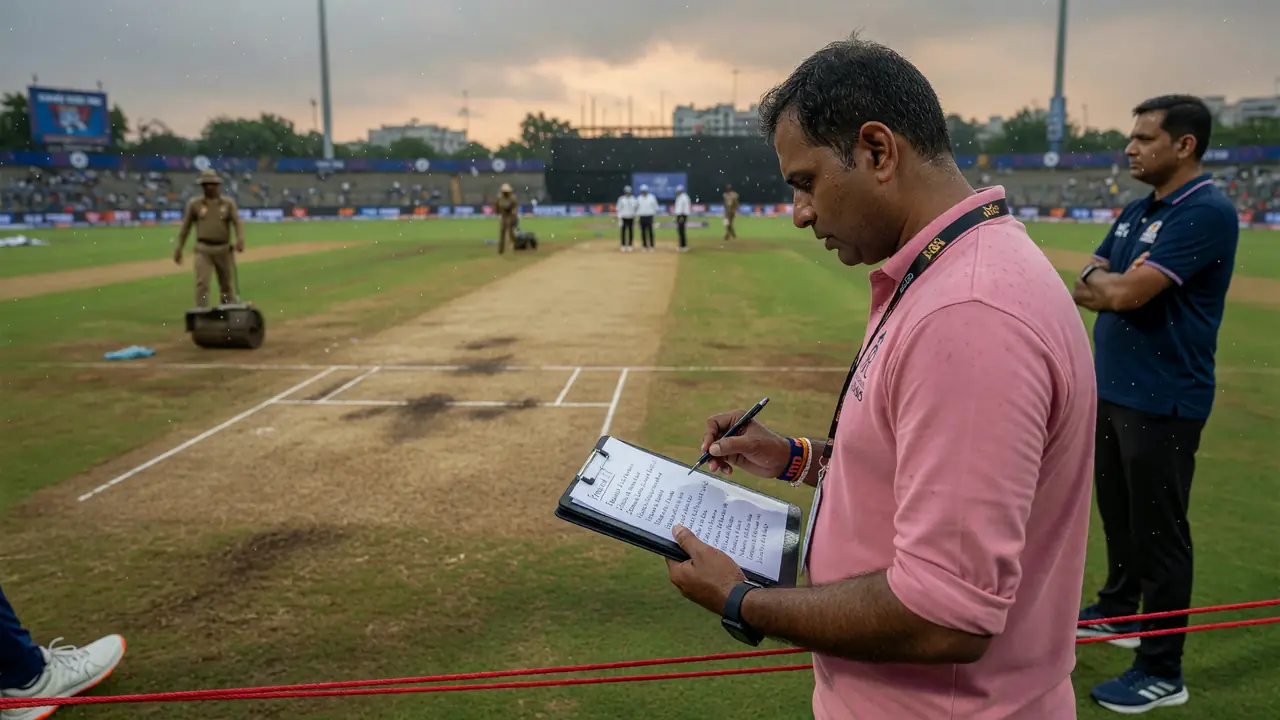
The most personal thread in the 24 May preview was Jasprit Bumrah against teenage Rajasthan Royals opener Vaibhav Sooryavanshi. The subplot did not start in Mumbai. It started in Guwahati, where Sooryavanshi hit Bumrah for six off the first ball he faced. That single is the kind of clip that travels faster than a full scorecard, and The Times of India treated it as unfinished business rather than a one-off highlight.
Sooryavanshi’s form heading into the Wankhede game was not built on a quiet fifty. His latest knock versus Lucknow Super Giants was 93 off 38 while chasing 221, after he had started 11 off 12. The shape of that innings matters as much as the final tally: a slow start, then a release that turned a heavy chase into a scoring assault. Against a bowler of Bumrah’s control, that same gear-change is both the opportunity and the risk.
From a lock-in view, the duel is less about who “wins” the first over and more about role certainty. If Royals keep Sooryavanshi at the top, he is a high-ceiling opening option on a batting surface. If Mumbai bowl Bumrah in short, high-intensity bursts rather than long holding spells, the matchup becomes a sequence of three- or four-ball tests rather than a full-over negotiation. The preview did not invent a result; it named the tension that any serious fantasy sheet had to price.
Head-to-head: thirty-one meetings, almost even
Entering the contest, Mumbai Indians and Rajasthan Royals had met 31 times in the Indian Premier League. Mumbai held 16 wins; Royals held 15. That is as close as a long rivalry gets without being fully split. It does not predict a single afternoon at Wankhede, but it does strip away the idea that one side owned the fixture historically.
Even series records are useful in a different way. They tell captains and analysts that neither side can lean on a psychological gap built over a decade. The edge, if any, has to come from conditions, XI selection and the specific matchup of bowlers to batters on the day. On 24 May 2026 those edges were expected to sit in the red-soil surface, the afternoon humidity and the Bumrah–Sooryavanshi first-ball memory rather than in the all-time ledger.
For readers building multi-match form tables, the 16–15 split is also a reminder not to overweight franchise brand. Mumbai’s five titles and Royals’ younger core do not automatically rewrite a near-even head-to-head. The preview kept the rivalry numbers plain, and that plainness is part of why the brief still reads cleanly months later.
Toss timing, start time and the afternoon slot
The match was listed to start at 3:30 PM IST, with the toss at 3:00 PM IST. Those times matter because they place the contest firmly in the afternoon window rather than the dew-heavy night slot that dominates so much late-IPL conversation. The Times of India preview noted that dew was not expected to affect the first innings in the afternoon slot — a practical line for anyone who defaults to “bowl first at Wankhede” without checking the clock.
Afternoon cricket at Wankhede still carries heat and humidity, but it removes the second-innings ball-skid that night games often introduce. That changes how a chasing side values spin through the middle and how a bowling captain budgets the death overs. It also changes fantasy timing: the lock-in window closes earlier in the day, and late fitness news has a shorter runway to reach the sheet.
Readers who keep a personal toss log should mark the 3:00 PM toss as a different decision class from a 7:00 PM toss at the same ground. Same venue, different physical ball. The 24 May brief is a clean case study of that distinction because the preview said the quiet part out loud: dew was not the main character.
For a fuller view of how the desk handles toss windows, confirmed XIs and late fitness notes across the season, keep the Live Matches match-day notes open beside any historical preview.
Flat red soil, even bounce, and a hot Mumbai afternoon
The Wankhede pitch was described as a flat, true red-soil batting surface with even bounce, suiting a high-scoring game. That is the classic home reading many Mumbai seasons have produced when the surface is not used as a tired end-of-tournament strip. Even bounce reduces the premium on pure survival and raises the premium on timing and strike rotation through the first six overs.
Mumbai weather on the day was forecast hot and highly humid, with a zero percent rain chance during match hours. The temperature was listed at 32°C with humidity at 73 percent, feeling like 42°C after morning pre-monsoon thunderstorm rain. The morning rain is an important secondary fact: it can leave residual moisture in outfield pockets even when the overhead chance during the match itself is nil, and it can make the ball slightly heavier early before the afternoon heat dries the square.
Taken together, the pitch and weather lines pointed to a batting-first or batting-friendly contest rather than a seamers’ lottery. Fast bowlers still matter — especially Bumrah and Jofra Archer — but the surface description did not invite a low-scoring squeeze. Fantasy sheets built around pure grind bowling points were fighting the venue brief.
Predicted Mumbai Indians XI
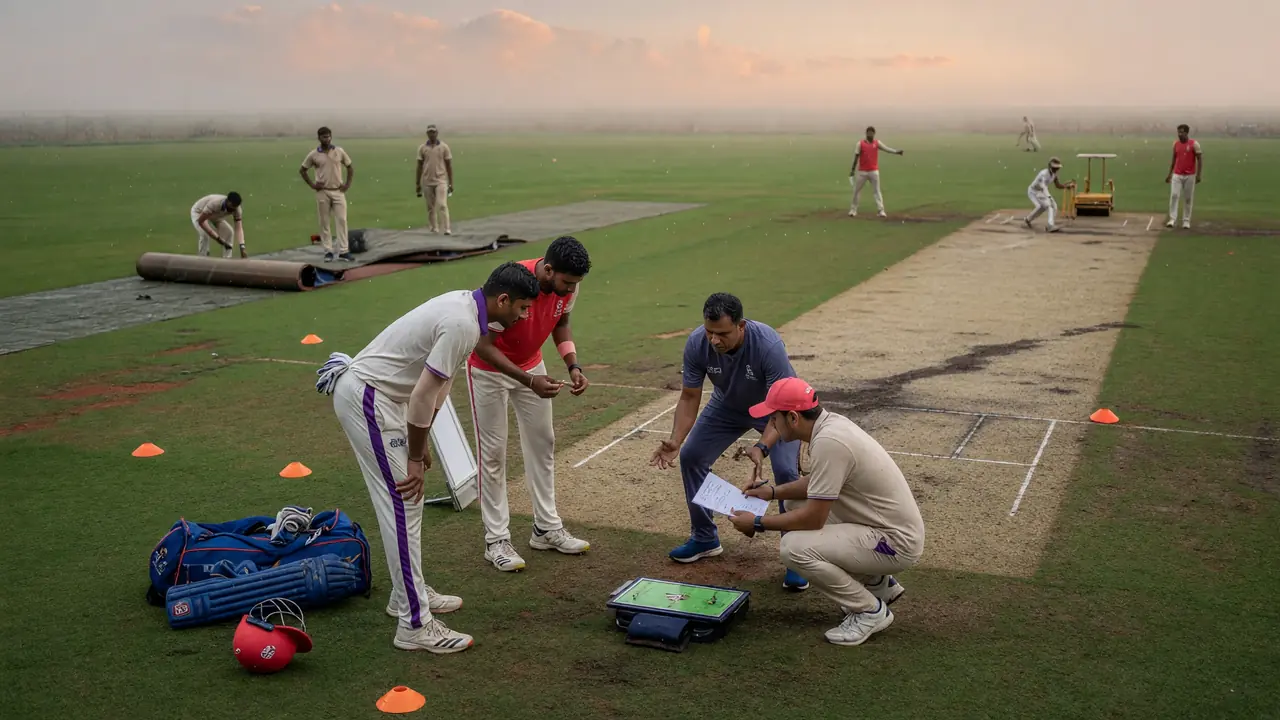
The Times of India preview listed the following predicted Mumbai Indians side: Rohit Sharma, Ryan Rickelton (wicketkeeper), Naman Dhir, Tilak Varma, Suryakumar Yadav, Hardik Pandya (captain), Will Jacks, Deepak Chahar, Corbin Bosch, Shardul Thakur and Jasprit Bumrah, with Raghu Sharma named as the impact player.
Read as a construction, the XI balances a left-hand/right-hand top order with two power options in the middle (Suryakumar and Hardik) and a bowling mix that can open with Chahar’s swing, hold with Bumrah’s control, and finish with Thakur and Bosch as change-up death options. Will Jacks adds a second spinning or seam-up part-time lever depending on match-ups, which is useful on a true surface where a sixth bowling option can protect a specialist.
Rohit at the top remains a high-variance captaincy candidate in any Wankhede afternoon because the boundary sizes reward early timing. Rickelton’s keeping role also makes him a dual-category fantasy piece if the platform scores wicketkeeper dismissals separately. Naman Dhir’s inclusion signals intent to keep a flexible middle who can accelerate without waiting for the nineteenth over.
The impact name — Raghu Sharma — is the quiet line. Impact substitutions only matter once the match state is known, but logging the predicted name in a historical brief is still useful: it shows which specialist the coaching group wanted available if the surface played slower than advertised or if a bowling matchup against Royals’ left-handers required an extra spinner.
Predicted Rajasthan Royals XI
Royals were predicted as: Yashasvi Jaiswal (captain), Vaibhav Sooryavanshi, Lhuan-dre Pretorius, Dhruv Jurel (wicketkeeper), Donovan Ferreira, Shubham Dubey, Dasun Shanaka, Jofra Archer, Sushant Mishra, Sandeep Sharma and Brijesh Sharma, with Yash Raj Punja as the impact player.
The top three is the statement. Jaiswal and Sooryavanshi give Royals left-hand aggression at both ends of the new ball, with Pretorius as a third attacking layer rather than a classical anchor. Jurel’s keeping stabilises the middle, while Ferreira and Dubey are selected as finishers who can clear the short straight boundaries if the innings reaches a launch window in the last five overs.
With the ball, Archer is the primary overseas strike threat, Sandeep Sharma the experienced change-of-pace option, and Sushant Mishra plus Brijesh Sharma the depth pieces who either share the powerplay or cover middle overs if the surface stays true. Shanaka’s all-round role is the glue: a batter who can bowl a few overs if the captain wants to hold a specialist back for the death.
Because the fixture was framed as a must-win for Royals’ playoff path, the predicted XI reads as a chase-or-set attack side rather than a containment side. That is consistent with a flat red-soil brief. Fantasy value concentrated in the top three batters and Archer, with Sandeep as the differential if Mumbai’s middle leaned on right-hand accumulators rather than pure hitters.
How the stakes split the two dressing rooms
Rajasthan Royals’ playoff mathematics made risk cheaper. A side that needs a win can promote a teenager, bowl its best bowler in the powerplay and accept a higher ceiling. Mumbai Indians’ brief was narrower: protect standards, avoid the wooden spoon, and still field a competitive XI in front of a home crowd. Jayawardene’s emphasis on pride was not motivational wallpaper; it was the only available currency once elimination was settled.
That split also affects captaincy calls in fantasy formats that reward aggressive scoring more than they punish collapse. Royals batters on a must-win afternoon are more likely to play the high-variance shot early. Mumbai batters may still attack — Wankhede invites it — but the team context is maintenance rather than ladder recovery. The preview’s value is that it stated both contexts without forcing a false equivalence.
In practical desk terms, unequal stakes should change your ranking of “safe” versus “ceiling” captains. On 24 May 2026 the safer ceiling sat with Royals’ top order if the toss and surface matched the published brief. Mumbai’s ceiling still existed through Rohit, Suryakumar and Hardik, but the team’s seasonal destination no longer amplified every boundary the way a live playoff chase does.
Broadcast notes from the original brief
The preview listed broadcast on Star Sports Network with live streaming on JioHotstar. Those distribution lines do not change the cricket, but they matter for anyone reconstructing the day from archive clips or checking how the toss conversation was framed on air. Afternoon slots also tend to pull a different television audience mix than primetime, which is why commercial breaks and on-air toss segments sometimes feel tighter in the 3:30 PM window.
For a retrospective desk, the broadcast credit is simply provenance: the match was a mainstream IPL rights window, not a fringe feed. Anyone reviewing the fixture later can expect full-match archives to exist on the licensed platforms named in the original note.
What a modern lock-in sheet would still take from 24 May
Strip the date away and the brief still teaches four durable lessons. First, check the start time before you invent dew. Second, price teenage form when the innings tape shows a slow start turning into a 90-plus strike explosion, not only when the batter is already famous. Third, treat near-even head-to-head records as a reason to lean harder on conditions. Fourth, write down the predicted impact players even if you cannot select them — they reveal the coaching group’s contingency mind.
The Bumrah–Sooryavanshi thread is the emotional centre, but the structural centre is the stakes split. Royals needed the result; Mumbai needed the standard. Any future Wankhede afternoon that pairs a live playoff hunter against an eliminated home side will rhyme with this preview, even if the names change.
None of that requires inventing a final score. The Times of India piece was a preview, and this note stays inside that boundary. The facts that remain useful are the ones that were on the page on the morning of 24 May 2026: venue, timing, weather, pitch character, predicted XIs, rivalry ledger and the named subplot that every serious fantasy sheet had to confront before the toss.
Legacy of the brief for IPL fantasy readers
Months after the original publication, the 24 May 2026 MI vs RR preview remains a clean teaching file for afternoon Wankhede preparation. It shows how a mainstream match preview can still be precise about humidity, feels-like temperature, toss clock and impact names without sliding into empty hype. It also shows how a single historical duel — six off the first ball in Guwahati — can organise an entire match narrative when the same two players meet again.
Keep the note beside other late-season Wankhede files. Compare how often afternoon previews correctly dismiss dew, how often teenage openers retain the new ball after a breakout chase, and how eliminated home sides still field full-strength bowling attacks when pride and table position at the bottom are the only remaining incentives. Those comparisons are the present-day use of an old preview: not nostalgia, but pattern recognition for the next lock-in window that looks like this one.
Build the next lock-in from verified match notes
Use confirmed XIs, toss timing and venue reads before you finalise captains. Historical previews only help when they sit next to the current desk.